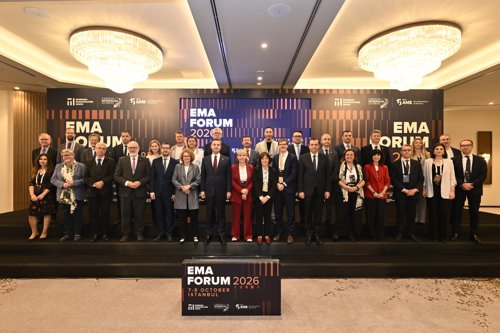


9th Local Governance And Migration Meeting Held
Ayanoğlu addressed 4 main periods in the history of Turkish migration to Germany which has started in the early 60s as a result of labor recruitment agreement signed between the Turkish and German governments in 1961 by specifically focusing on migration policies of the Federal German Republic. He elaborated on Kreuzberg Municipality’s approach to migration, and the municipality’s cooperation with the civil society organizations and projects aiming at Turkey originated migrants. In his brief overview, Ayanoğlu showed that the Federal governments’ attitude towards the issue of migration has shifted over time by pointing out the changes in the laws and regulations regarding the migrants’ settlement in the country, and he added that this change has not always been towards the one facilitating the integration of the migrants. He also underlined that on the societal level, some people started to adopt racist views and targeted the houses of Turkish migrants, which resulted in the deaths of several migrants. On the other hand, Ayanoğlu highlighted that the local governments may follow different paths and embrace inclusive policies which promote social cohesion even in the periods when the issue of migration and social cohesion has not been received enough attention by the central government and when the negative views towards migrants exist in a society. He put forward the example of Kreuzberg Municipality, which has been addressing the issue of migration seriously from the early 70s by creating administrative structures focusing on migration and cohesion as well as social institutions which support migrants to enter into work life, gain the knowledge of the German culture, learn the German language, and to carry out activities on own culture. This practice revealed that local governments may play an pivotal role in improving the dialogue with the migrants, in upgrading their skills for the employment, and in contributing to the development of the society as a whole.